

Latest news
A research team from the Machine Vision and AI (MV&AI) Lab at BFU's College of Technology has published a study in Food Bioscience (IF=5.9) introducing an innovative approach to non-destructive classification of jujube varieties using dual-hyperspectral imaging and deep learning.
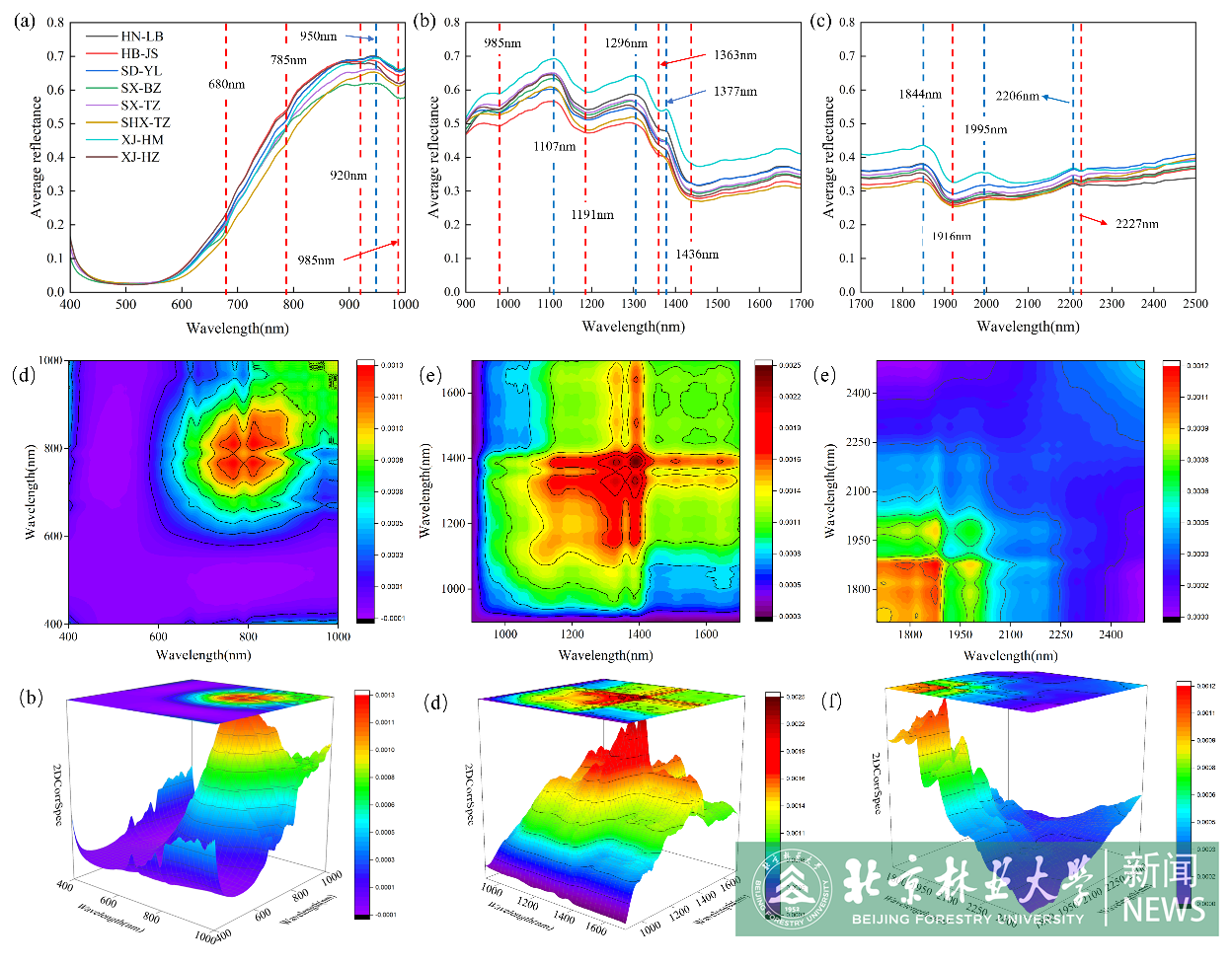
The significant variations among jujube varieties substantially impact their nutritional and economic values. Establishing a non-destructive and efficient classification model is imperative for preventing market fraud. This study investigates the viability of integrating Visible Near-Infrared (VNIR) and Short-Wave Infrared (SWIR) hyperspectral data into chemometric and deep learning models to differentiate various jujube varieties. Two-dimensional correlation spectroscopy (2DCOS) and competitive adaptive reweighted sampling (CARS) methods were employed to identify key characteristic wavelengths and analyze critical chemical bonds. A deep learning model, PSO-CNN-BiGRU, was developed by integrating a Convolutional Neural Network (CNN) with a Bidirectional Gated Recurrent Unit (BiGRU) and optimizing it using Particle Swarm Optimization (PSO) to enhance channel attention mechanisms. Experimental results showed that the PSO-CNN-BiGRU model, using 2DCOS-CARS extracted data (VNIR and SWIR), achieved classification accuracy of 98.26 %, precision of 98.41 %, specificity of 99.75 %, and sensitivity of 98.26 %. Furthermore, the study constructed chemometric models including Random Forest (RF), Extreme Learning Machine (ELM), and Support Vector Machine (SVM), and conducted comparative analyses of classification results based on original and characteristic-selected spectra within the VNIR and SWIR ranges against the information fusion models. The findings demonstrated that the PSO-CNN-BiGRU deep learning model, based on information fusion, exhibited a marked enhancement in classification accuracy compared to conventional chemometric models, particularly regarding characteristic-level data fusion. In summary, this research demonstrates the application of fused VNIR and SWIR hyperspectral data combined with deep learning algorithms for jujube variety classification, providing an innovative and efficient technical approach for classifying jujube and related economically important crops.
The first author of the paper is doctoral student Liu Quancheng, while the corresponding authors are Associate Professor Yu Chunzhan and Professor Yan Lei. This research was funded by the Fundamental Research Funds for National Natural Science Foundation of China (Grant No. 31770769), Class A Project of the Graduate Innovation Fund of the College of Engineering, Beijing Forestry University.
Paper link: https://doi.org/10.1016/j.fbio.2025.107441
Written by Liu Chongquan, Yu Chunzhan
Translated and edited by Song He
Reviewed by Yu Yangyang