


Latest news
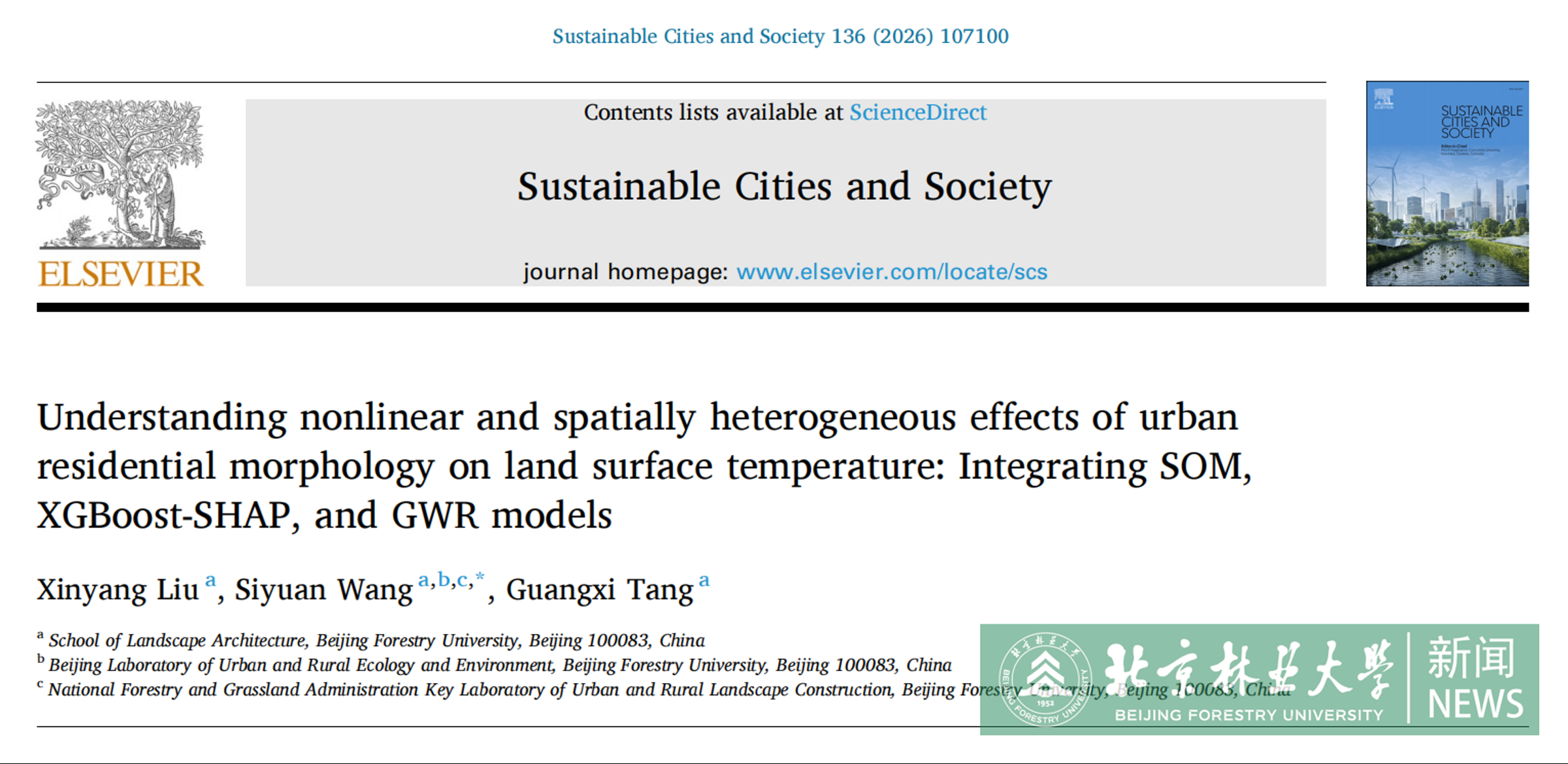
A research team led by Professor Wang Siyuan from the School of Landscape Architecture has made significant progress in understanding how the morphology of high-density urban residential areas affects land surface temperature (LST). Their findings entitled "Understanding nonlinear and spatially heterogeneous effects of urban residential morphology on land surface temperature: Integrating SOM, XGBoost-SHAP, and GWR models", published in Sustainable Cities and Society (IF=12.0), integrate unsupervised neural networks, explainable machine learning, and spatial regression to reveal nonlinear and spatially heterogeneous relationships.
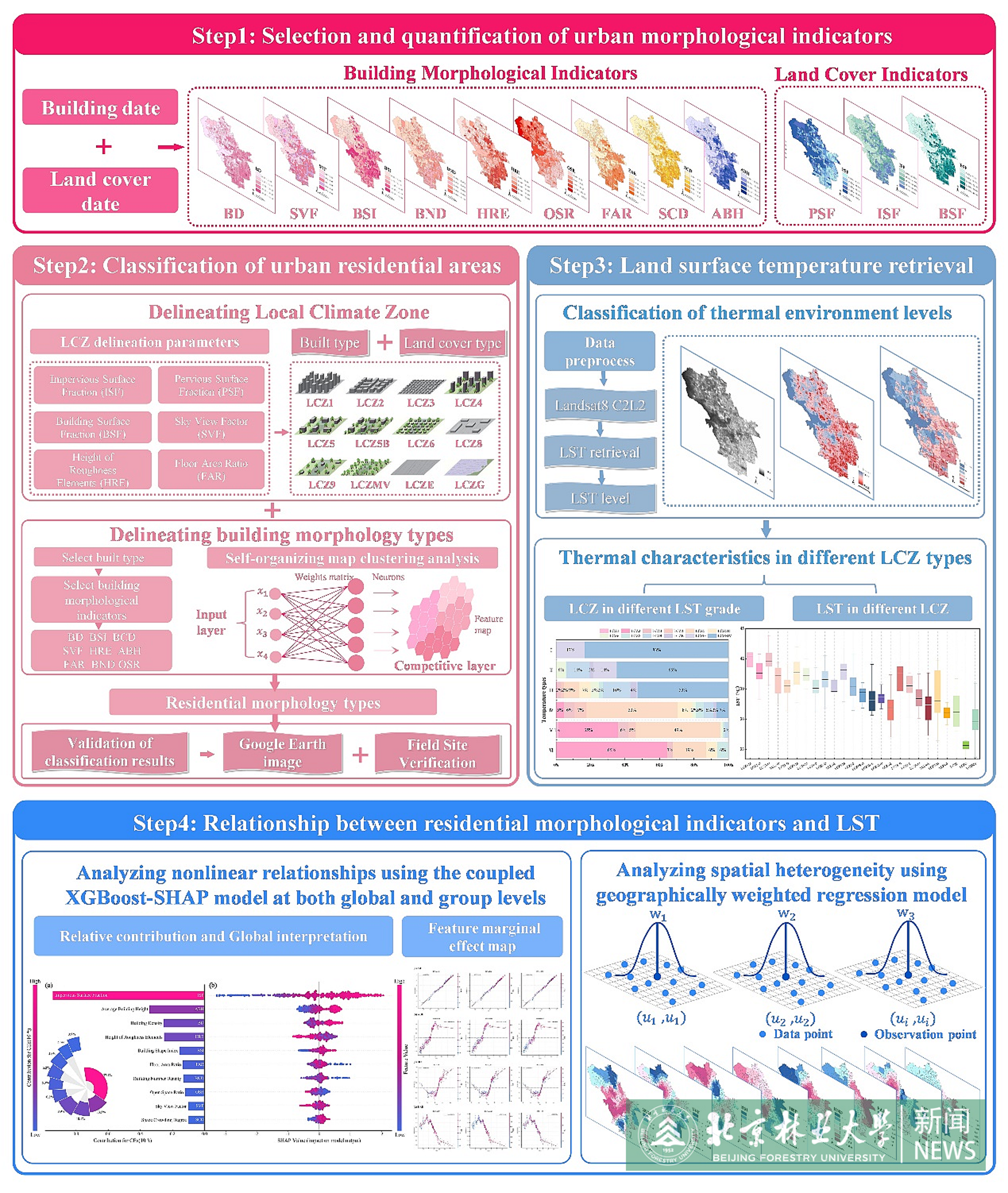
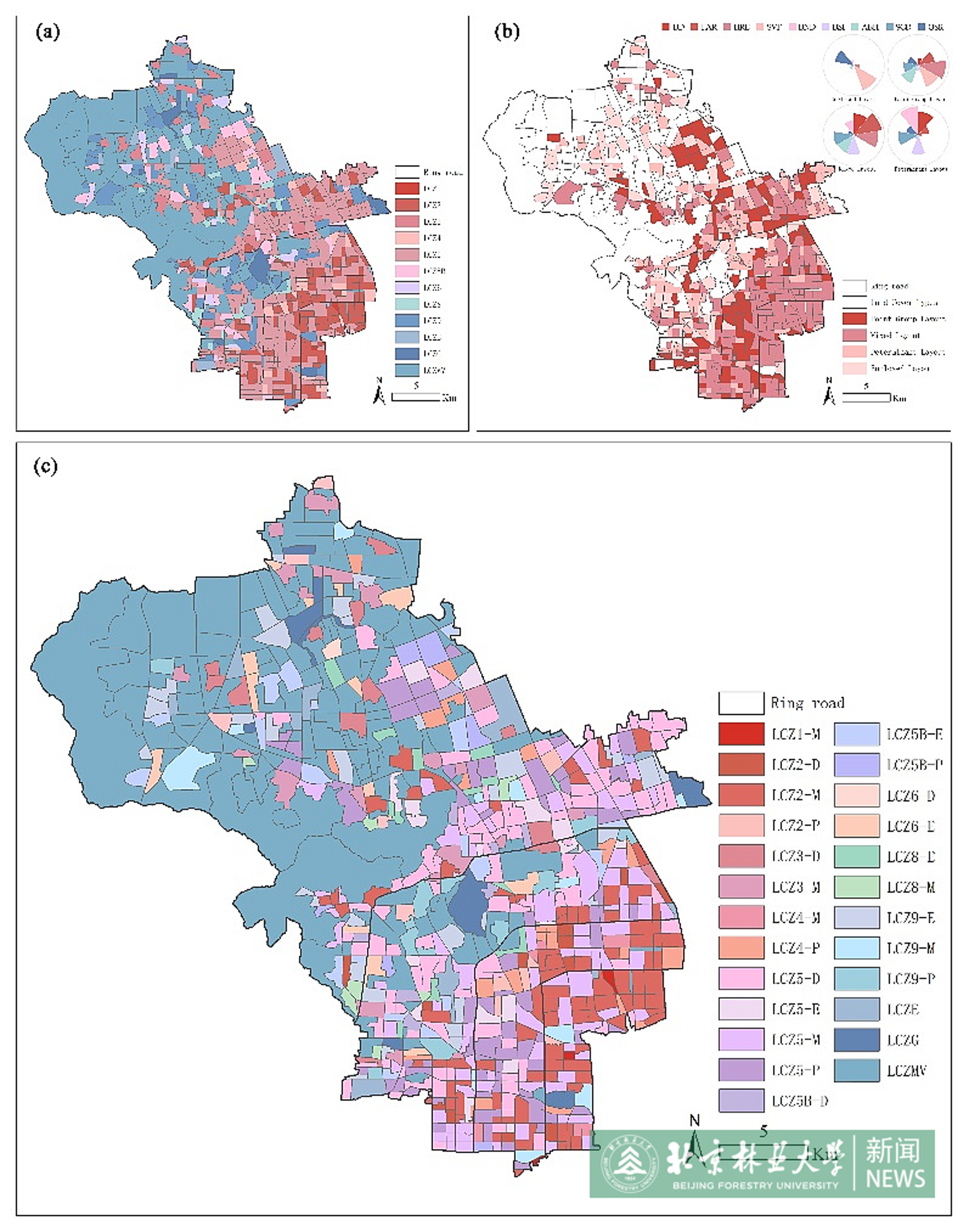
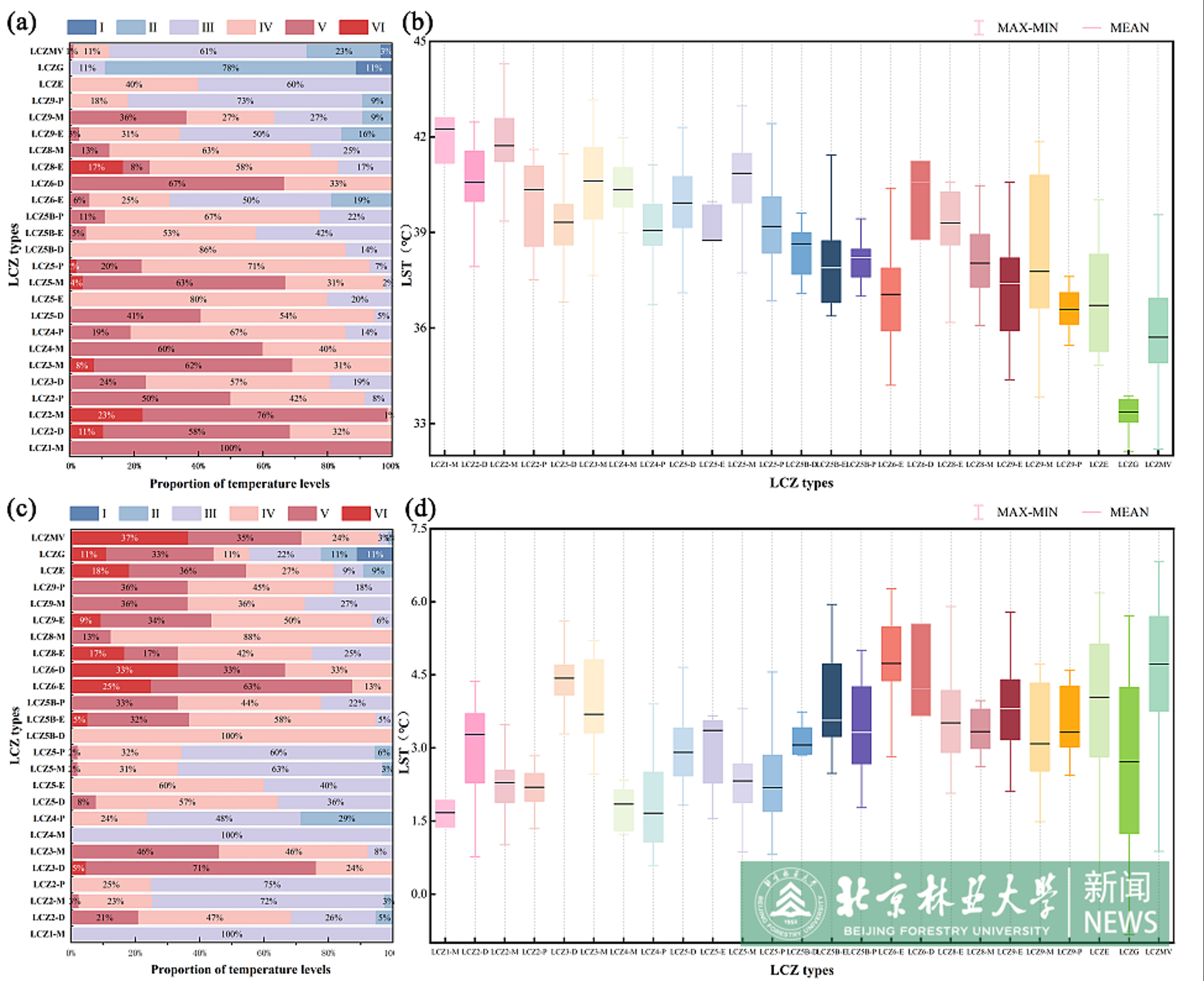
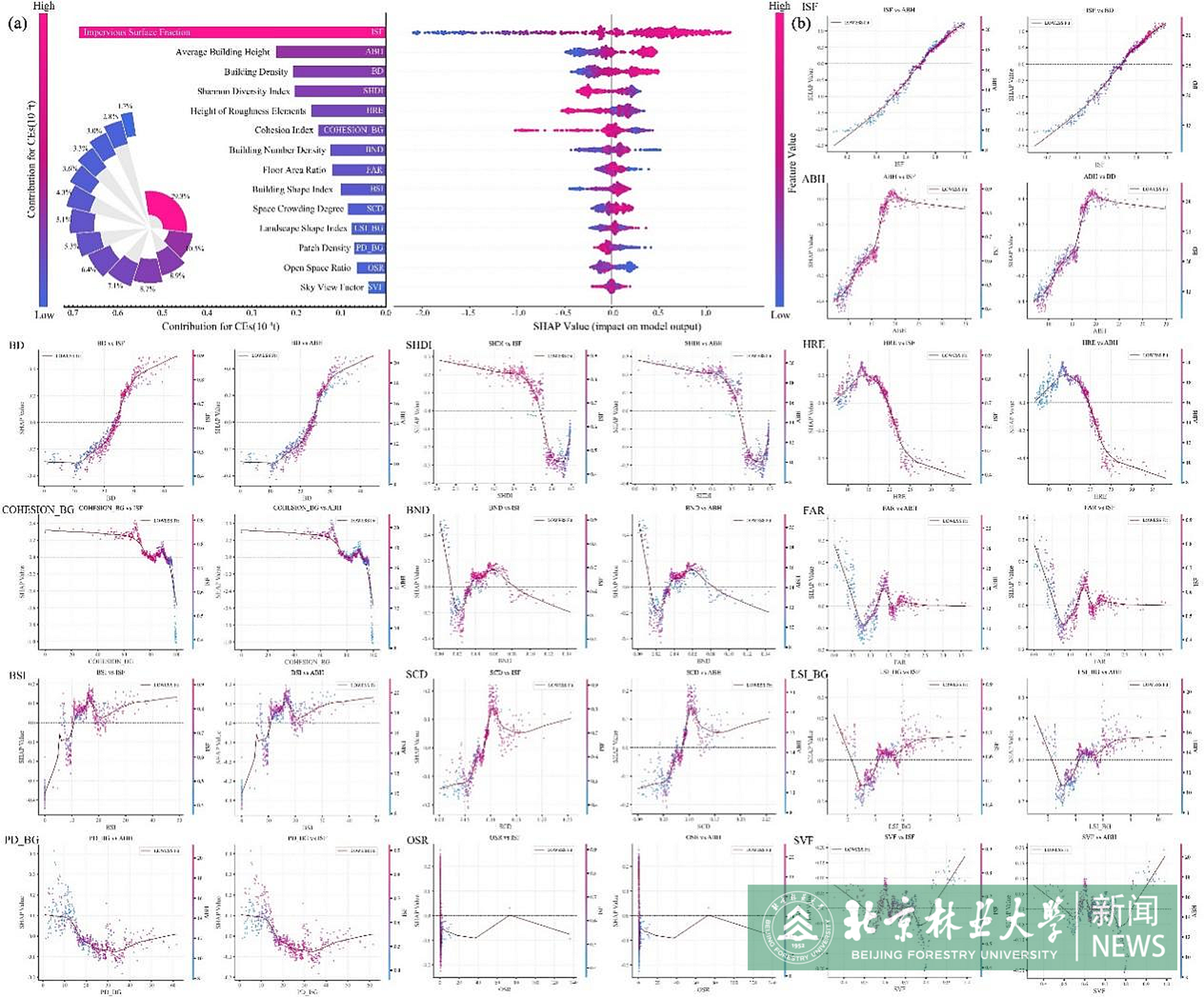
The thermal environment of urban residential areas significantly impacts thermal comfort and urban sustainability. However, challenges remain in accurately identifying distinct residential morphology types and in elucidating the nonlinear relationships and spatial heterogeneity between internal structure and land surface temperature (LST). This study focuses on Beijing's Haidian District, where a novel morphological classification framework was developed by integrating Local Climate Zone (LCZ) with the Self-Organizing Map (SOM) method, enabling a refined identification of residential morphology. An interpretable XGBoost-SHAP machine learning model was employed to quantify the effects of morphological factors on LST at both global and group levels. Finally, spatial heterogeneity was examined using Geographically Weighted Regression (GWR). The results indicate that (1) A total of 25 distinct urban morphology types were identified, dominated by compact and open mid-rise mixed building types (LCZ2-M and LCZ5-M), with an overall circling development. (2) In summer, compact built types exert stronger negative effects on the thermal environment than land cover types. Conversely, the opposite pattern is observed in winter. In the same LCZ, mixed layouts contribute the highest summer LST, whereas enclosed layouts dominate in winter. (3) Impervious surface fraction (ISF) emerged as the most influential factor on summer LST, followed by average building height (ABH), building density (BD), and Shannon Diversity Index (SHDI), underscoring the crucial roles of vertical spatial structure and landscape diversity. (4) The regulatory mechanisms of LST vary structurally and seasonally across different LCZ types. High-rise compact types mitigate heat accumulation through shading and ventilation, whereas open and vegetation-dominated types alleviate thermal stress via blue-green spaces evapotranspiration. Notably, open enclosure layouts provide effective shading during summer and enhance heat retention in winter. These findings offer nuanced strategies for optimizing thermal regulation within residential environments.
Liu Xinyang, a Ph.D. student from the School of Landscape Architecture, is the first author of the paper, with Professor Wang Siyuan serving as the corresponding author. The work was supported by the National Natural Science Foundation of China (Grant No. 521083038).
Paper link: https://doi.org/10.1016/j.scs.2025.107100
Written by Wang Siyuan
Translated and edited by Song He
Reviewed by Yu Yangyang


