



Latest news
Recently, Lecturer Jin You from the College of Technology at Beijing Forestry University (BFU) published a paper titled "Piezoelectric actuated planar lightwave circuits for quantum key distribution" as first and corresponding author in Optics and Laser Technology (IF: 5.3, JCR Q1), a leading international journal in the field. The study introduces a novel piezoelectric actuated planar lightwave circuit (PLC) chip, offering a high-integration, low-power solution for next-generation Quantum Key Distribution (QKD) systems.
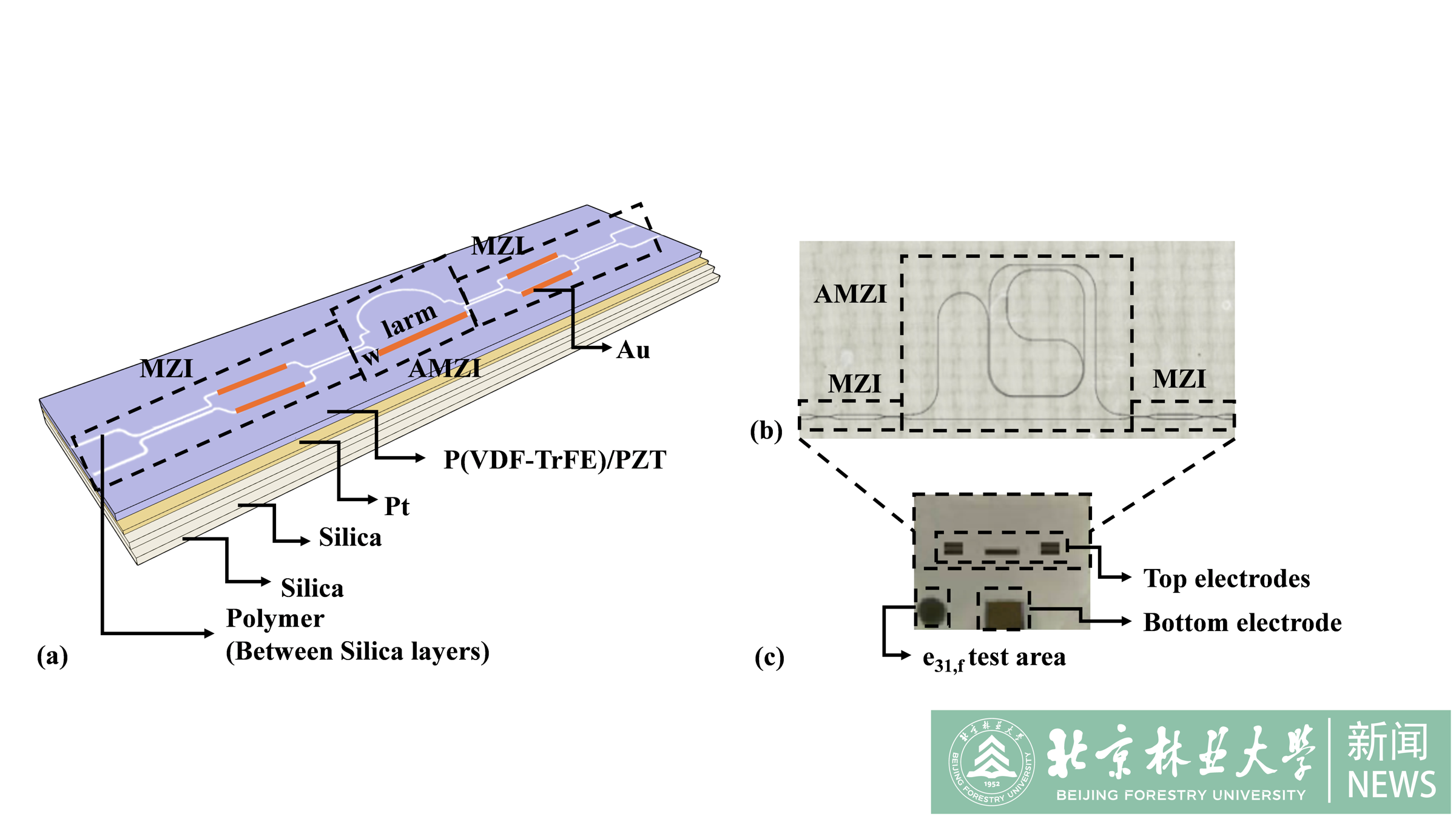
Structure of the chip. (a) Schematic diagram of the chip, device scale is adjusted, and the core layer layout are drawn on the top layer to show the PLC structure more clearly. (b) Optical micrograph of the PLC. (c) Top-view graph of the chip after fabricated piezoelectric layer.
While QKD provides theoretically absolute security against the looming threat of quantum computing, existing systems often rely on bulky optical fibers or high-power thermo-optic and electro-optic modulators. Addressing the critical need for micro- and modular quantum networks, You’s team developed a PLC chip that leverages a stress-driven mechanism for phase modulation. This is achieved by ingeniously combining polymer waveguides—which possess a high photoelastic coefficient—with high-performance piezoelectric thin films.
e
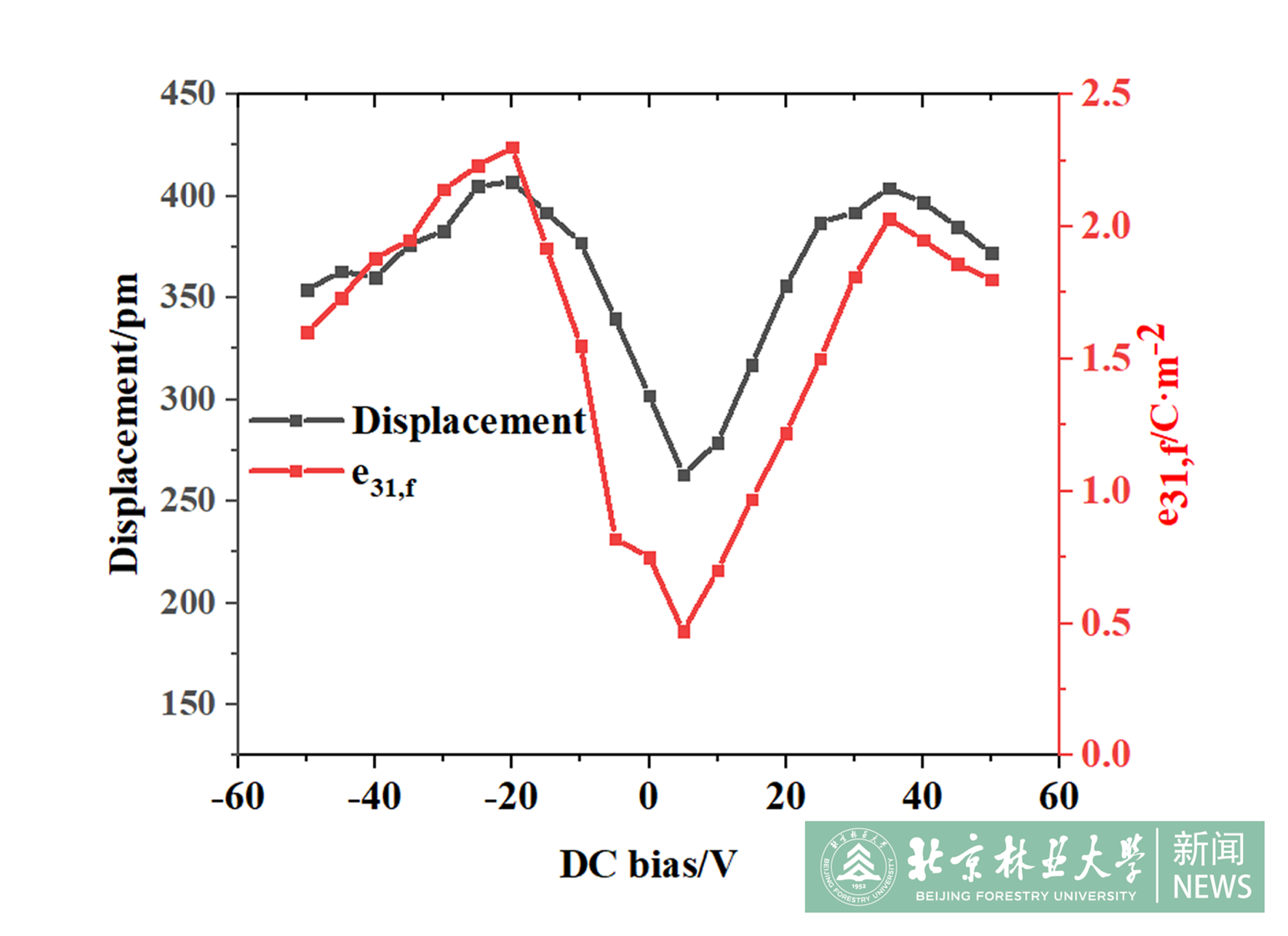
Experimental evaluations validated the chip's robust capabilities across multiple metrics. Piezoelectric tests using a Laser Doppler Vibrometer (LDV) successfully extracted the effective coefficient e31,f, confirming its strong driving performance. Optically, the chip achieved a rapid response time of just 12 ns in classical light tests, significantly outperforming conventional thermo-optic modulators. Crucially, single-photon experiments demonstrated excellent quantum performance, yielding an interference visibility exceeding 92% and a Quantum Bit Error Rate (QBER) of merely 4%. The device also proved exceptionally stable, maintaining a minimal performance drift of approximately 1% during six hours of continuous operation.
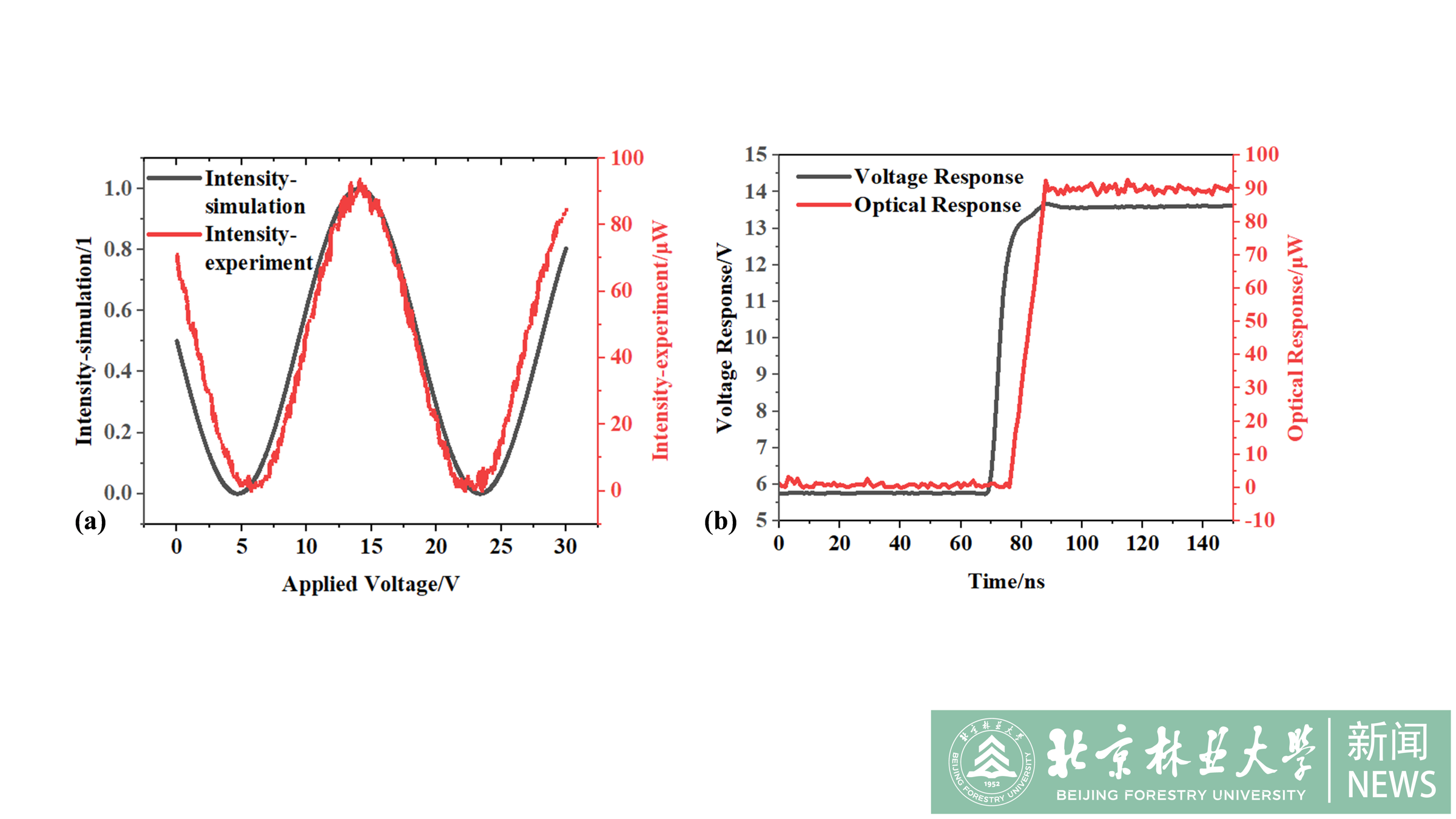
Results of classical optical transmission experiment. (a) Output optical intensity changing with different bias voltages. (b) Voltage and optical response time.
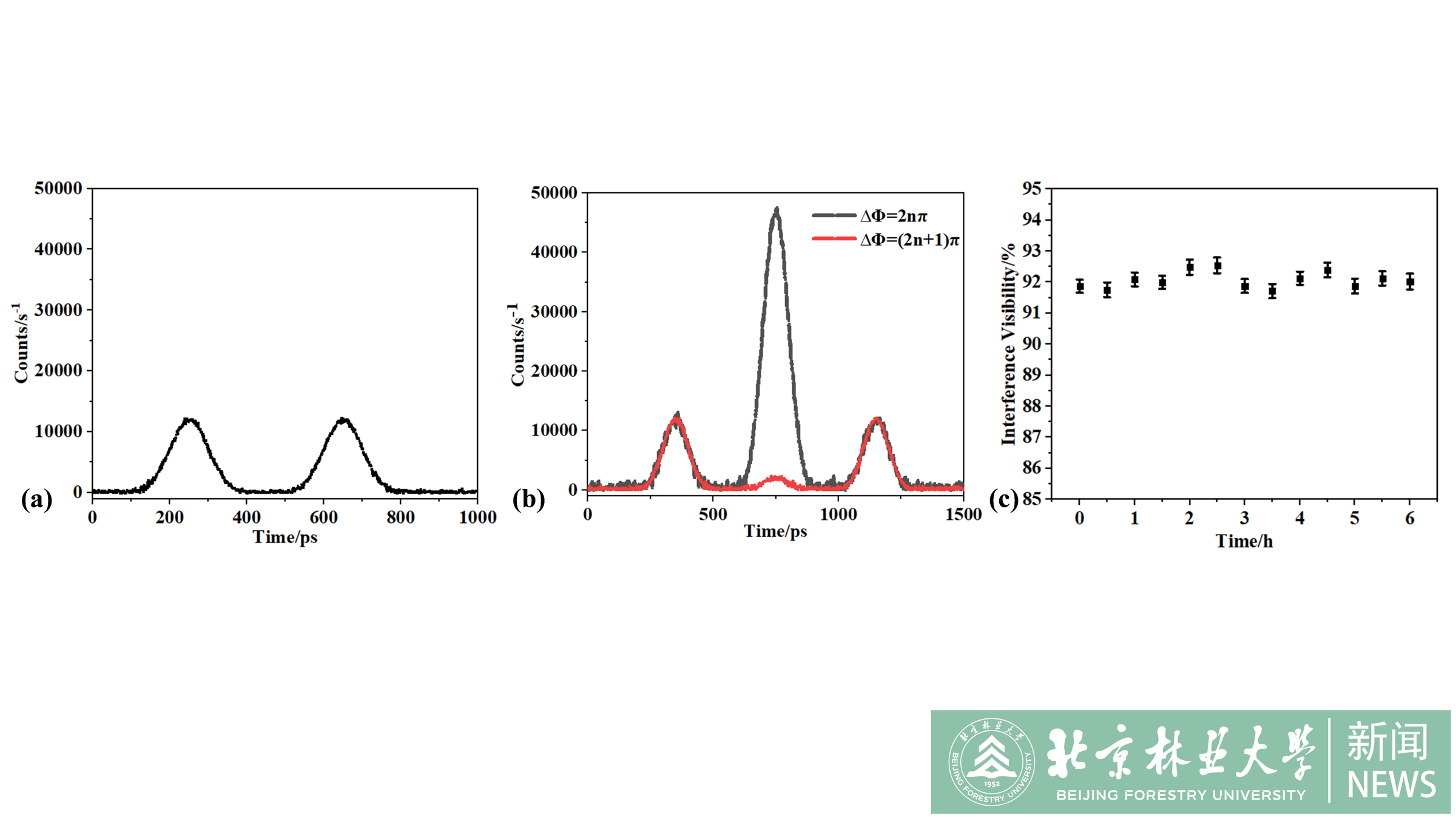
Results of QKD transmission experiment. (a) Balanced pulse-pair in encoder generated by piezoelectrically actuated PLC. (b) Interference waveform generated by the system. (c) Stability experiment in 6 h.
This research dramatically lowers the integration complexity and power consumption of QKD systems, paving the way for the large-scale, cost-effective deployment of quantum communication hardware.BFU serves as the primary affiliated institution for the paper. The co-authors are Pengle Cheng (BFU), Ping Yin, Yipeng Lu, and Bowen Sheng (School of Integrated Circuits, Peking University),and Qinghai Liu (Institute of Semiconductors, Chinese Academy of Sciences).
This work has been supported by National Natural Science Foundation of China (32171797).
Paper link: https://www.sciencedirect.com/science/article/pii/S0030399226002185
Written by You Jin
Translated and edited by Song He
Reviewed by Yu Yangyang


