


Latest news
A research team led by Professor Chang Zhihui from the College of Grassland Science has published a study in Soil Biology & Biochemistry, a leading journal in soil science. The paper, titled "Earthworms enhance soil phosphorus cycling but plant responses differ among earthworm ecological categories: a meta-analysis", systematically evaluates how different ecological groups of earthworms influence soil phosphorus dynamics and identifies the key pathways involved.
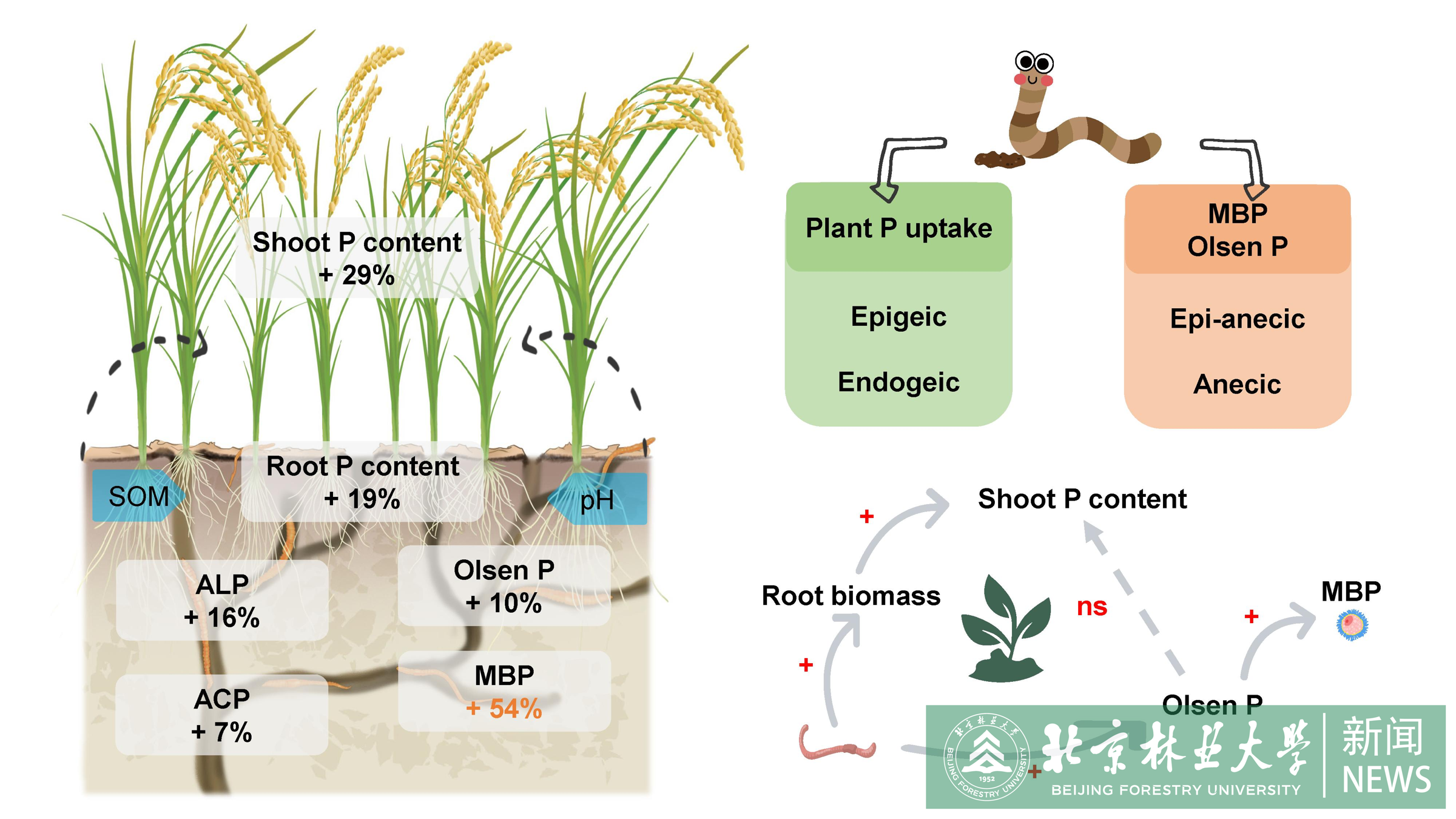
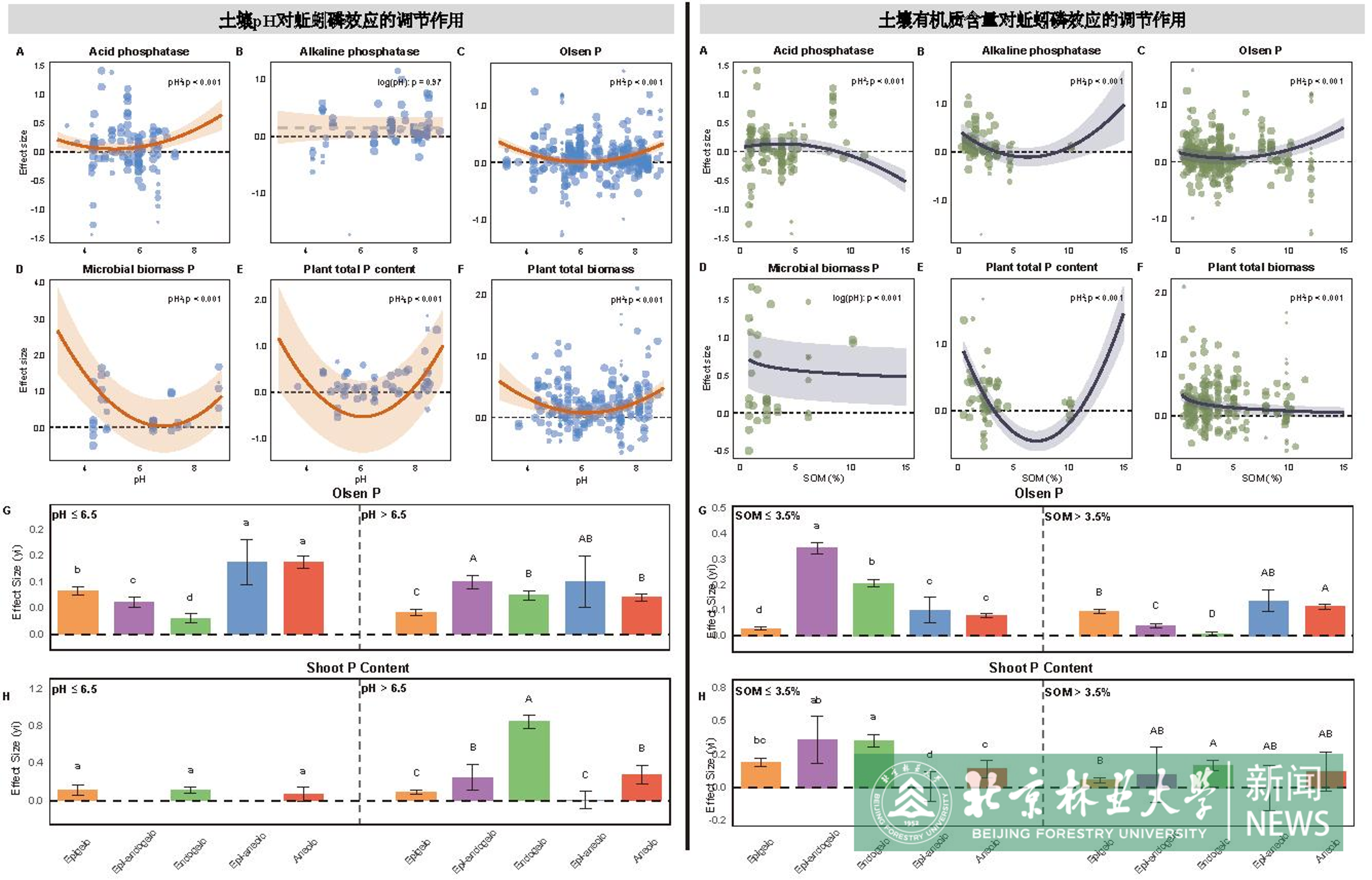
Earthworms are integral to soil processes and influence plant growth and phosphorus (P) nutrition. We investigated the role of earthworms in the P cycle by synthesizing data from 181 studies, of which 22 % were field observations and 78 % were from pot or mesocosm experiments. Earthworms increase the concentration of soil Olsen P and microbial P, phosphatase activity, and plant biomass. Deep-dwelling epi-anecic and anecic earthworms are more effective than other ecological groups at increasing the soil available P, although surface-dwelling earthworms (epigeic and endogeic) contribute more effectively to plant P uptake. The increase of plant biomass by earthworms decreases with increasing organic matter content, but Olsen P concentration and plant P uptake show the opposite trend. Moreover, the impact of endogeic earthworms on P is sensitive to soil organic matter content. The positive effects of earthworms on P cycling are more pronounced under acidic and alkaline conditions than under neutral conditions (6.5–7.5). Finally, the increased available P concentration due to earthworms directly stimulates microbial P uptake, while all three main ecological categories of earthworms indirectly stimulate root growth and increase plant P uptake. Overall, earthworms can effectively promote P cycling in ecosystems, with a more significant effect in nutrient-poor soils.
The paper's first author is doctoral student Wang Ziyue, with Associate Professor Ding Wenli and Professor Chang Zhihui serving as corresponding authors. The research received guidance from Professor Benjamin L. Turner of Gyeongsang National University and Academician Hans Lambers of the University of Western Australia.
This work was supported by National Science Foundation of China (32361143870), National Key R&D Program of China (2023YFF1304303) and the Fundamental Research Funds for the Central Universities (BLX202163).
Paper link: https://doi.org/10.1016/j.soilbio.2025.110025
Written by Wang Ziyue
Translated and edited by Song He
Reviewed by Yu Yangyang


