

Latest news
A joint research team from the College of Technology and the School of Ecology and Nature Conservation has made significant progress in AI-driven forest fire rekindling detection. Their findings, published in Engineering Applications of Artificial Intelligence (CAS Q1 Top, IF: 9.0), propose a multimodal visual detection framework named MVF-YOLO, which fuses infrared thermal and visible-light imagery to accurately identify potential rekindling areas in complex post‑fire environments.
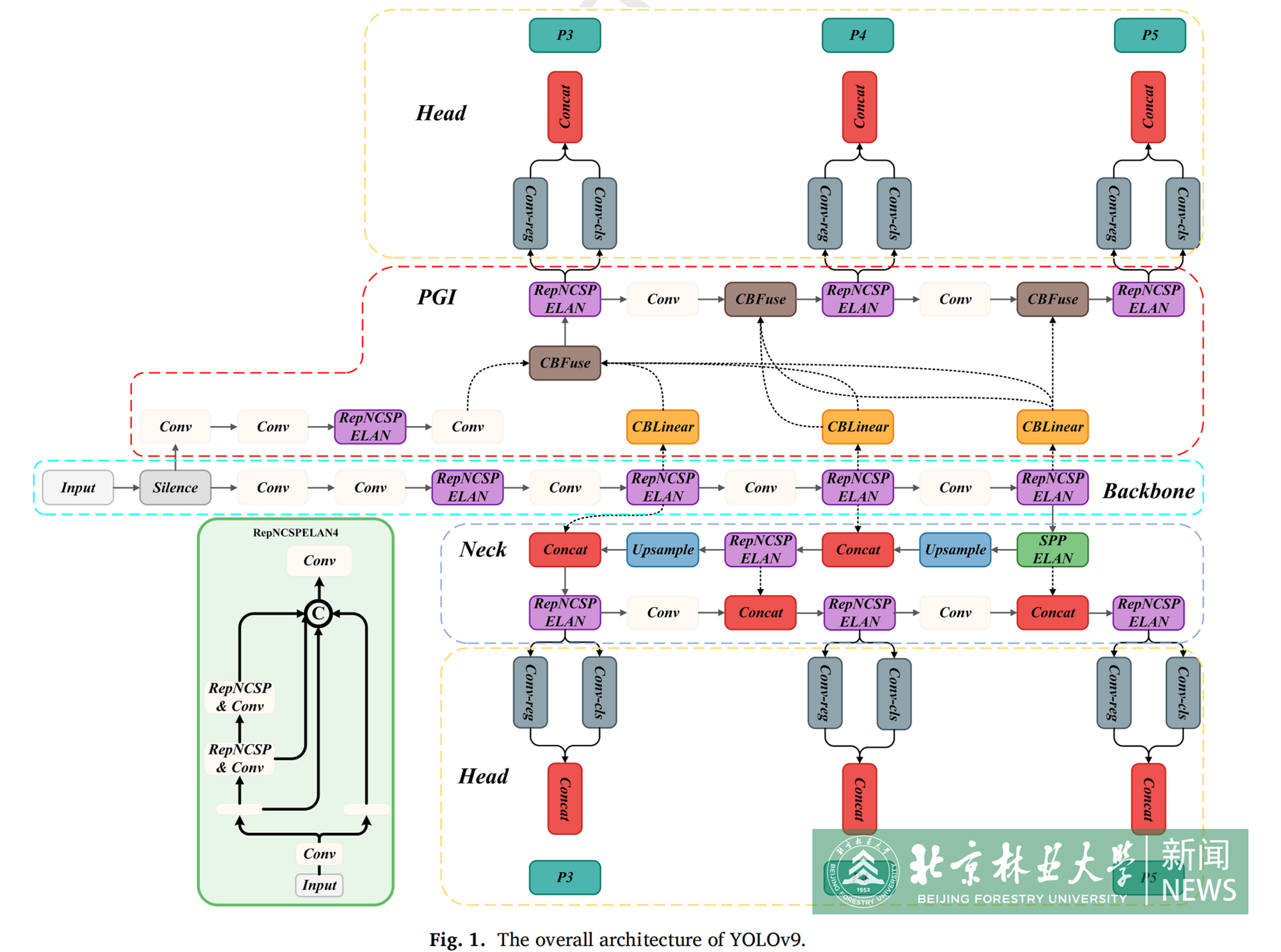
ire reignition is a major challenge in post-fire forest monitoring because residual heat sources may trigger secondary fire spread and cause severe ecological and economic losses. Existing studies mainly focus on macro-scale wildfire risk prediction using meteorological, vegetation, or historical fire data, while real-time image-based detection of fire reignition remains insufficiently investigated. In practical post-fire environments, smoke occlusion, weak thermal signatures, complex backgrounds, and blurry target boundaries further increase the difficulty of accurate localization. To address these challenges, this paper proposes a multimodal vision-based fire reignition detection framework (MVF-YOLO) that jointly exploits infrared thermal information and visible-light scene features. Specifically, an Enhanced Cross Rubik Cube Attention Fusion (RCAFusion) Network is designed to strengthen infrared–visible feature interaction and capture complementary thermal and spatial cues. In addition, an efficient channel attention (ECA) mechanism is embedded into the detection backbone to enhance the representation of weak reignition-related features, and an α-powered Intersection over Union (AlphaGIoU) loss is adopted to improve bounding box regression for irregular and ambiguous reignition regions. Experimental results demonstrate that MVF-YOLO achieves 98.5% average precision at an intersection over union threshold of 0.5 (AP50) and 89.3% mean average precision over intersection over union thresholds from 0.5 to 0.95 (AP) on the paired infrared–visible fire reignition dataset. In particular, compared with the strong YOLOv9 baseline, MVF-YOLO improves AP50 by 4.2% and AP by 5.7%, while maintaining comparable model complexity and real-time inference capability. These results indicate that MVF-YOLO provides an effective and practical solution for real-time fire reignition detection in complex post-fire monitoring scenarios.
Yin Dongxu, a master's student at the College of Engineering, is the first author of the paper. Professor Cheng Pengle (College of Engineering) and Professor Liu Xiaodong (College of Ecology and Nature Conservation) serve as co-corresponding authors. The first author is affiliated with Beijing Forestry University.This study was supported by the National Natural Science Foundation of China (grant No. 32171797) and the Chunhui Project Foundation of the Education Department of China (grant No. HZKY20220026)
Paper link: https://doi.org/10.1016/j.engappai.2026.115726
Written by Cheng Pengle
Translated and edited by Song He
Reviewed by Yu Yangyang